Cat Sprain: What to Do and How to Care for Your Cat at Home
By Tanika Hall, Founder of Fyndaria. Bandage and splint care checked against Langford Vets at the University of Bristol, and medicine safety against the University of Illinois College of Veterinary Medicine, on November 3, 2026. The rest-at-home tips are general tips to confirm with your vet. This is general information, not veterinary advice.
TL;DR
- A limping cat needs a vet visit. A sprain and a broken bone can look the same from the outside, and your vet may need an X-ray to tell them apart.
- Never give your cat human pain medicine. Acetaminophen (Tylenol) should never be given to a cat; even a small dose can cause severe harm or death.
- If your vet sends your cat home in a bandage or splint, keep it clean and dry, check it twice a day and look at the toes daily.
- Call your vet for slipping, a bad smell, wetness, chewing, sores or swollen or cold toes. Call too if your cat stops eating or seems unwell.
- Rest is a big part of recovery. Follow your vet's treatment plan and keep your cat in a small, quiet space with no jumping until your vet says otherwise.
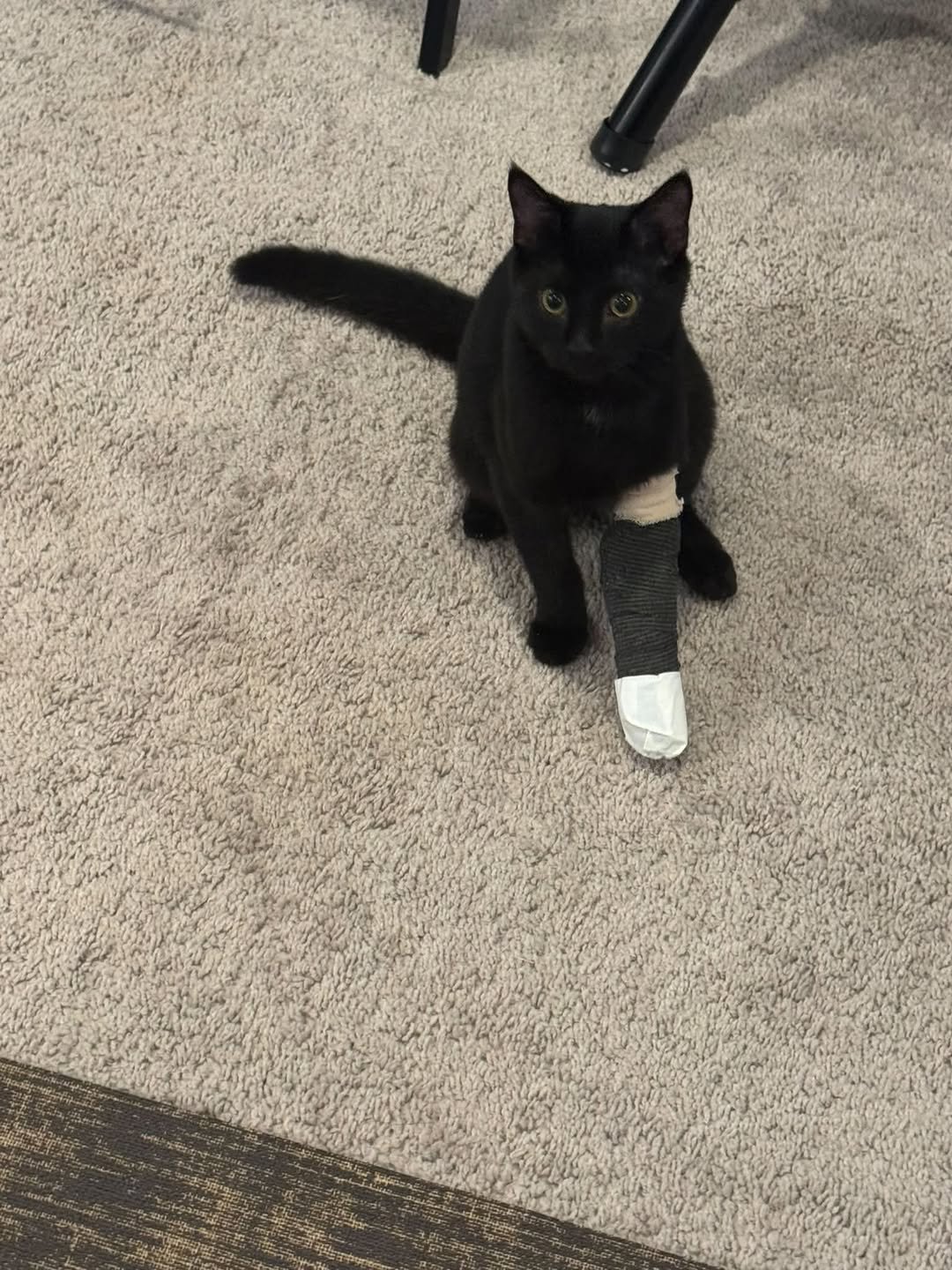
This is my cat, Solar Eclipse, with a bandaged leg after a sprain.
Is it a sprain?
A sprain is an injury to a ligament, usually from a bad landing, a twist or a jump that went wrong. Cats hide pain well, so the signs are often small: limping, holding a leg up, not wanting to jump, licking one spot or hiding more than usual.
You can't tell a sprain from a fracture, a dislocation or an abscess from a bite just by looking. That is why the first step is always the vet. They will examine the leg and may take X-rays before deciding on rest, a bandage, a splint or something more.
What to do right away
- Keep your cat still. Put them in a carrier or a small room so they can't jump and make it worse.
- Do not give any human medicine. The University of Illinois College of Veterinary Medicine says acetaminophen should never be given to a cat, and that pain medications are among the most toxic human drugs for pets. Your vet can prescribe pain relief that is safe for cats.
- Get help fast when it looks serious. If the leg looks bent, there is a wound or your cat is crying in pain, go to a vet or emergency clinic now. If your cat won't put weight on the leg, ask to be seen the same day. Otherwise call your vet and describe what you saw.
Caring for a bandage or splint at home
Langford Vets, the veterinary hospital at the University of Bristol, gives this advice for dressings, splints and casts:
- Keep it clean and dry at all times. If it gets wet, your vet needs to change it, so watch the water bowl and litter box.
- Check the top and bottom twice a day for rubbing or for the bandage slipping.
- Look at the toes every day if they show. They should not be cold or swollen. Toes that look pushed apart can be a sign of swelling.
Call your vet if you see
- The bandage slipping or changing shape on the leg
- Chewing at the bandage or other signs of discomfort
- A bad smell, or wetness or soiling you can't explain
- Sores or swelling near the bandage
- Swollen toes
- Your cat being lethargic or not eating
Making rest easy
These are general tips. Check them against the discharge instructions your vet gives you.
- Choose a small room. A bathroom or spare room with no high furniture keeps your cat from climbing or jumping.
- Use a low-sided litter box. A shallow tray, or a regular one with the front cut down, so your cat doesn't have to step over a high edge.
- Put food, water and bedding on the floor. Nothing your cat has to jump up to reach.
- Ask about a cone. If your cat won't leave the bandage alone, your vet may suggest a cone (Elizabethan collar).
- Keep the recheck. Bandages usually need checking or changing by the vet, so book the recheck before you leave the clinic. Ask whether to withhold food before a bandage-change visit.
- Follow your vet's timeline. Going back to jumping too soon can set recovery back.
Common questions
How do I know if my cat's leg is sprained or broken?
You can't tell by looking. Both can cause limping and swelling, so your vet needs to examine the leg and may take X-rays.
Can I give my cat Tylenol or ibuprofen for pain?
No. Acetaminophen should never be given to a cat, and even a tiny dose can cause severe harm or death. Human pain medicines are among the most toxic drugs for pets. Ask your vet for pain relief made for cats.
How do I take care of my cat's bandage at home?
Keep it clean and dry, check the top and bottom twice a day for rubbing or slipping, and look at the toes daily for swelling or coldness. Call your vet for slipping, smell, wetness, chewing, sores, swelling or a cat that stops eating.
How long does a cat sprain take to heal?
It depends on how bad the sprain is, so ask your vet for a timeline. Strict rest and keeping every recheck appointment help it heal without setbacks.
More from Fyndaria
Read why to get the rabies vaccine and microchip early and why to spay or neuter and how to find a low-cost clinic. If you need a vet nearby, search for vets on Fyndaria.
Sources: Langford Vets, University of Bristol: Dressings, casts and splints advice sheet · University of Illinois College of Veterinary Medicine: Don't give over-the-counter medications to your pet. This article is general information, not veterinary advice. Ask your own vet about your pet.